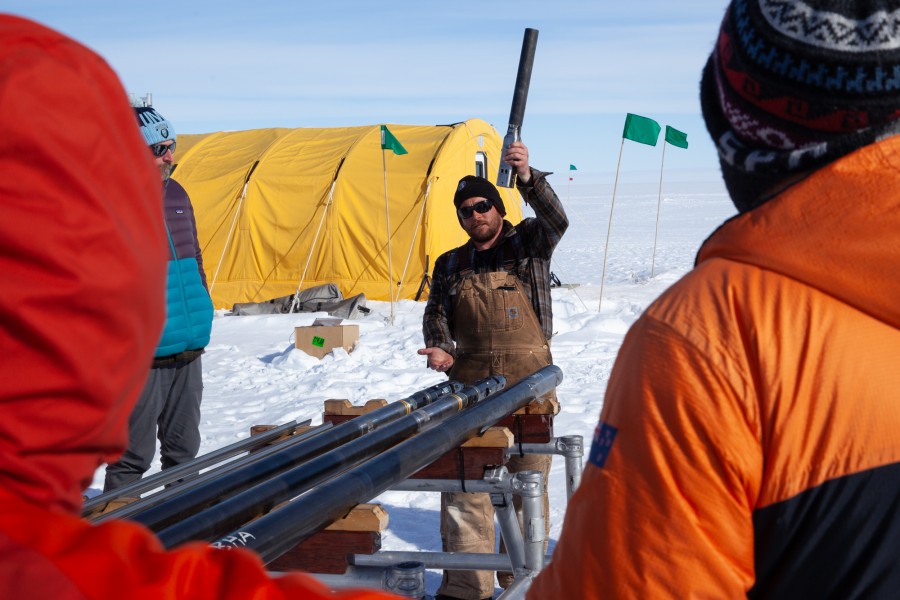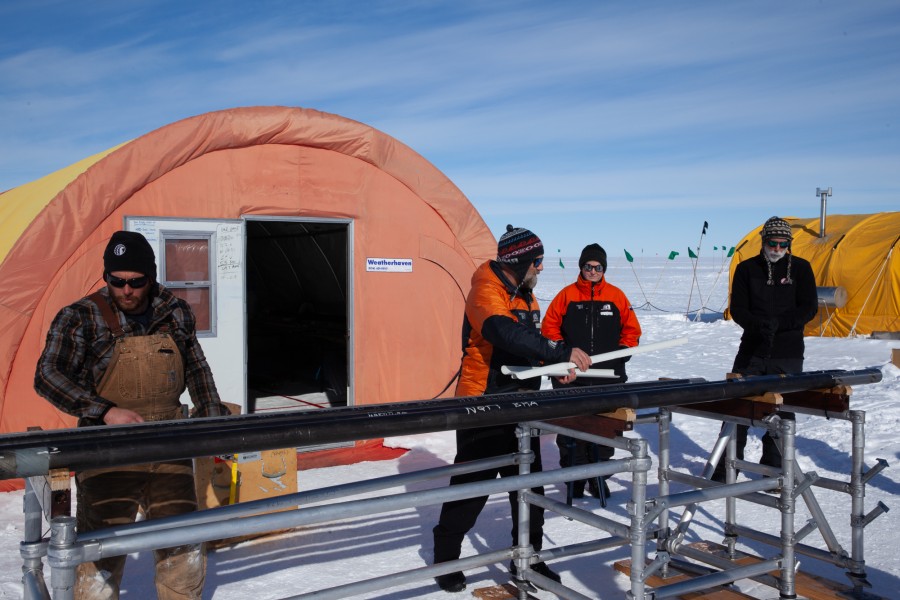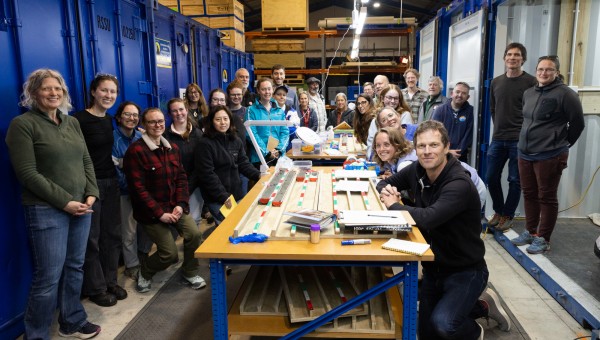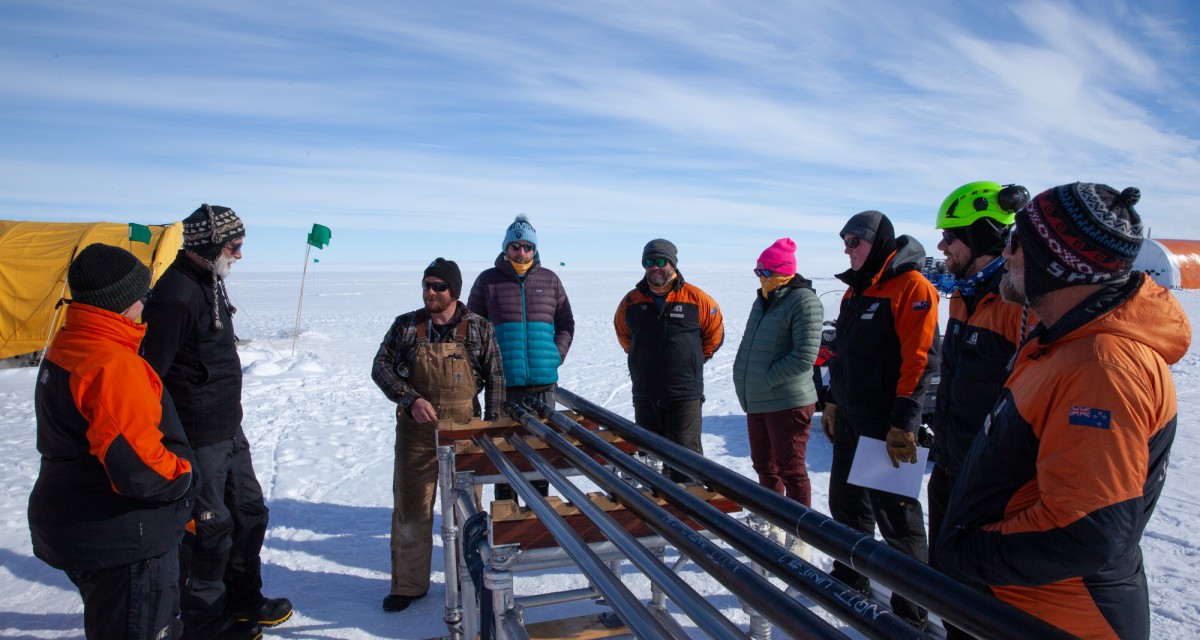
Our science and AIDD (Antarctic Intermediate Depth Drill) teams had a productive hands-on session today.
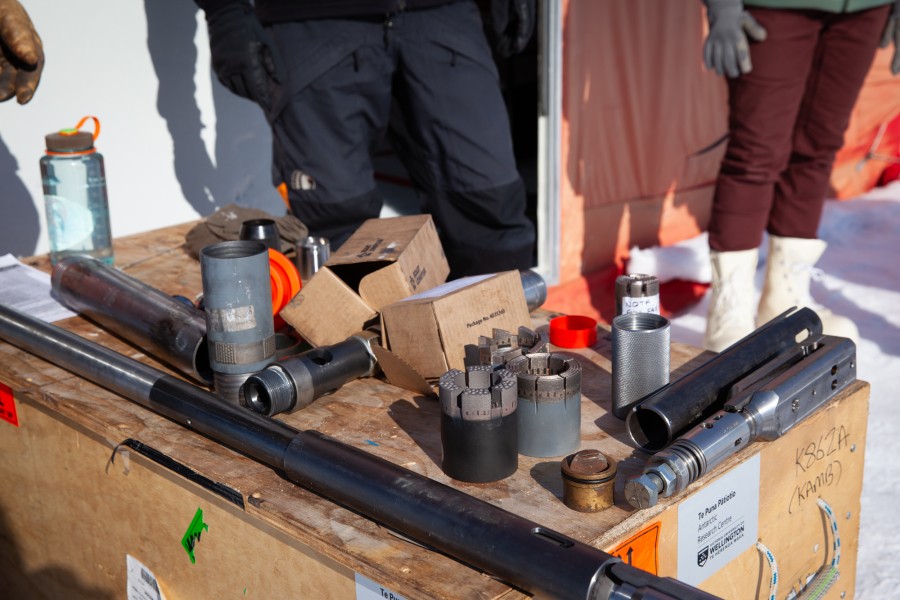
AIDD driller Sean McKeown talked the team through the various drilling tools on site (hydraulic piston corer, push corer and rotary corer) with input from the other drillers. Together, drillers and scientists discussed potential drilling strategies, and how to ensure the best possible core recovery.
Recovering sediments from the Antarctic margin is notoriously difficult, as it is often made of a range of different grain sizes and components. It was great to see the experience and expertise of the drillers and scientist coming together to talk through the options at hand and the choices to be made once operations are underway.
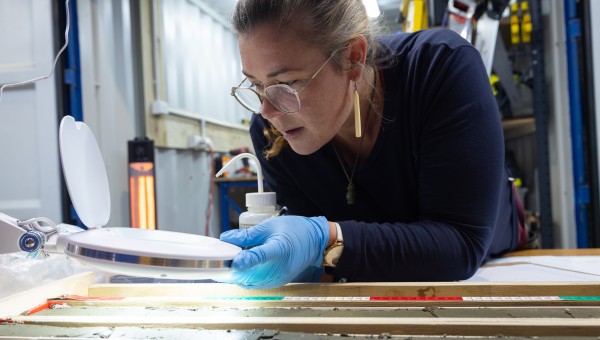
Drilling Science Coordinator Cliff Atkins walked the team through the steps once the core comes up. This included how to get the sediment out of the core liners/splits, how to deal with the core catchers for microbiology work, and how the core flow evolves after labelling the cores in the drill tent and taking them over the warm science container for x-rays.