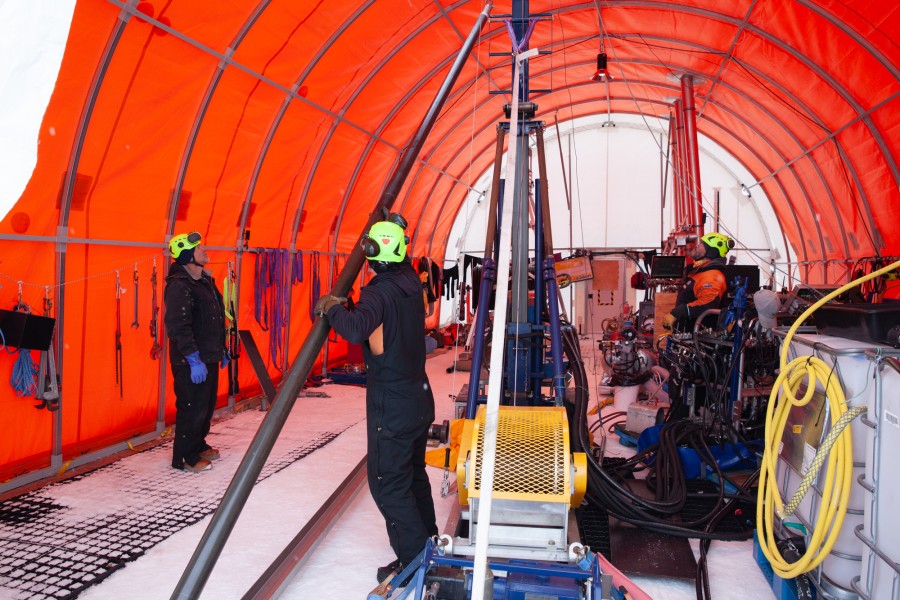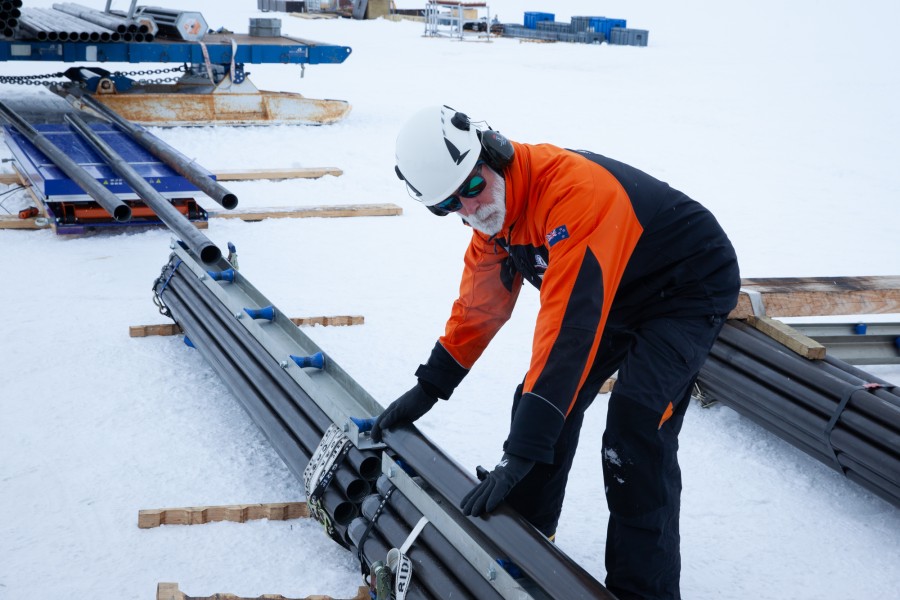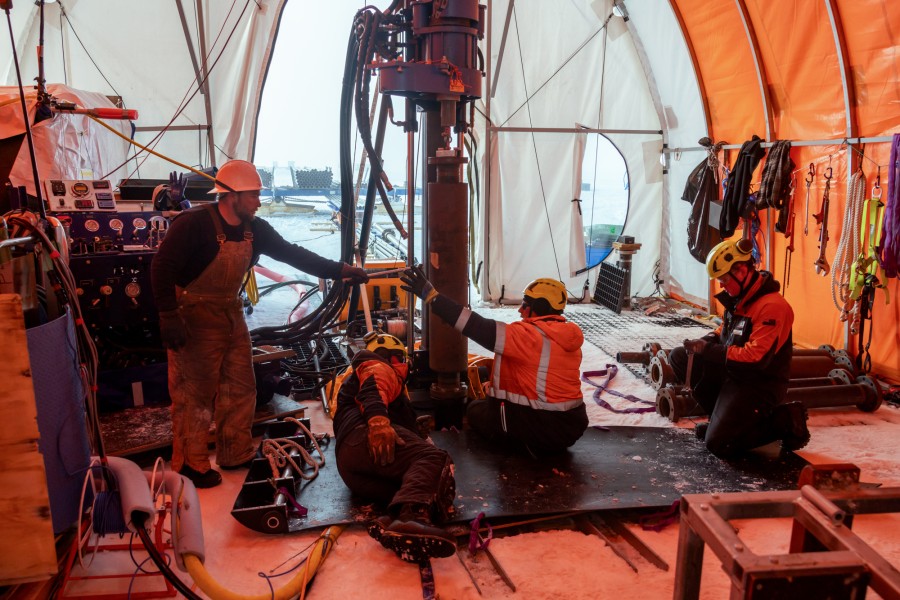
Our mission to deliver globally important science has been a roller coaster of highs and lows over the past few days. We successfully deployed the sea riser (the series of weighted components and steel pipe that connects the ice shelf surface to the sea floor and helps support the drill string) through the 588 m ice shelf, and the ocean cavity, to the sea floor (a total 632 m distance).
We are thrilled with this achievement, a critical and challenging step never previously accomplished through a thick ice shelf, so far from a base or logistical centre.
The drilling team were more than halfway through lowering the drill string down the riser in preparation for coring, when we had to stop operations due to a serious technical challenge. Unfortunately, we could not resolve this issue in the field, and have had to stop drilling operations at KIS3 for the season.
We are working at the frontier of logistics and scientific discovery, in an incredibly remote and harsh environment, and with that comes the risk of drilling not going to plan. Our talented team has put in a massive effort to get to this point, and we would have liked to see this effort rewarded with a sediment core from deep below the seafloor.
The geological record we seek is important for humanity, as we strive to mitigate and manage the impacts of climate change. We are proud to have taken on this challenge, and to have progressed closer than ever before.
We now look ahead to our next season at Crary Ice Rise, armed with new insights regarding our technological approach, and undeterred in our mission!