Source: Earth Sciences New Zealand
The vast West Antarctic Ice Sheet holds enough ice to raise global sea level by 4-5 m if it melts completely. It is protected on one side by the Ross Ice Shelf, the world’s largest floating ice mass, that serves as a buttress slowing the flow of glaciers and ice streams towards the sea. As our climate warms, the Ross Ice Shelf is becoming increasingly vulnerable, but there is uncertainty around what global temperature increase will trigger unsustainable melting of the shelf, and the subsequent loss of the West Antarctic Ice Sheet.
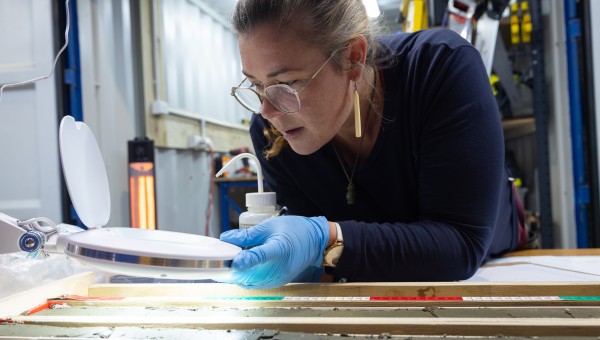
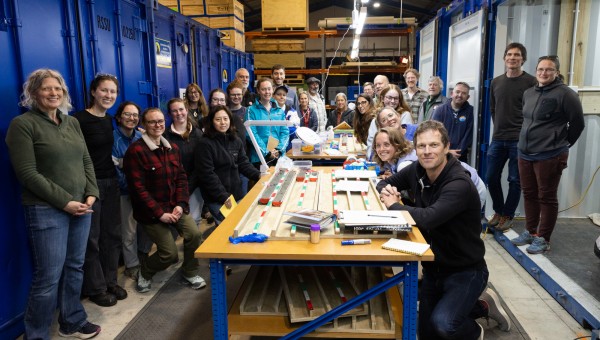
Retrieving a geological record to provide direct evidence of this temperature tipping point is the challenge driving the SWAIS2C (Sensitivity of the West Antarctic Ice Sheet to 2°C) project, a collaboration between 10 countries (New Zealand, the United States, Germany, Australia, Italy, Japan, Spain, Republic of Korea, the Netherlands, and the United Kingdom) involving more than 120 scientists. Earth Sciences New Zealand, Te Herenga Waka – Victoria University of Wellington and Antarctica New Zealand are at the helm leading project management, drilling operations, and logistics.