Test of modified drilling system a success
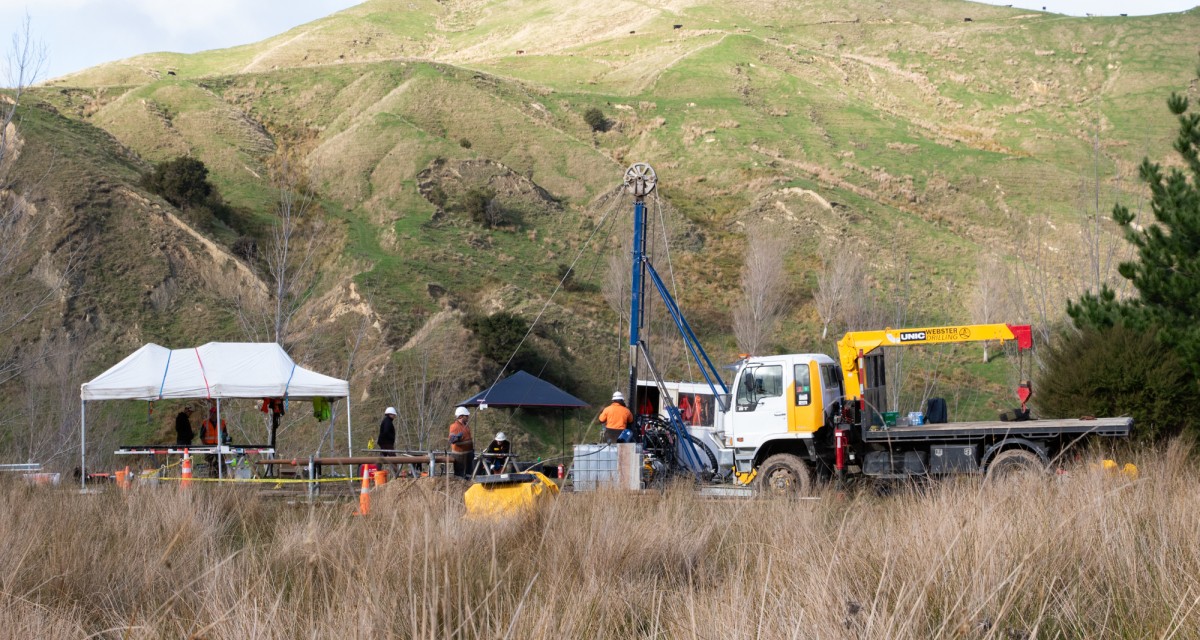
Our updated Antarctic Intermediate Depth Drill system has been put to the test in rural New Zealand and passed with flying colours.
It’s been a busy time behind the scenes since the last SWAIS2C season at KIS3. After technical challenges halted our drilling operations, the AIDD was traversed back across the Ross Ice Shelf to Scott Base. It was then shipped back to Aotearoa New Zealand, for a review by independent engineers.
Our engineering team have designed, engineered and installed several modifications to the system. These include new weight-engaged foot slips, a new winch, an updated mast, and a new base.
“There’s been a lot of effort put in, by a lot of different people, to modify the system for success this coming year,” says SWAIS2C Co-Chief Scientist Molly Patterson (Binghamton University).
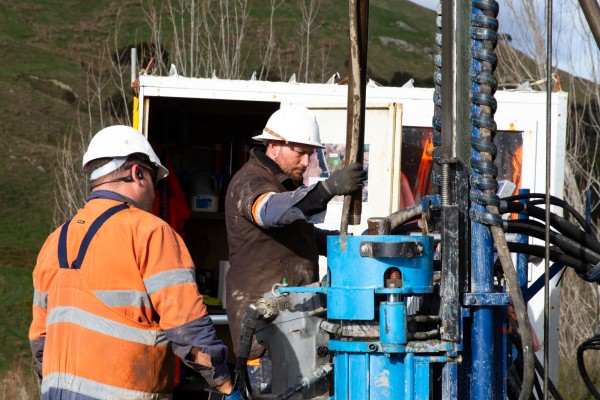
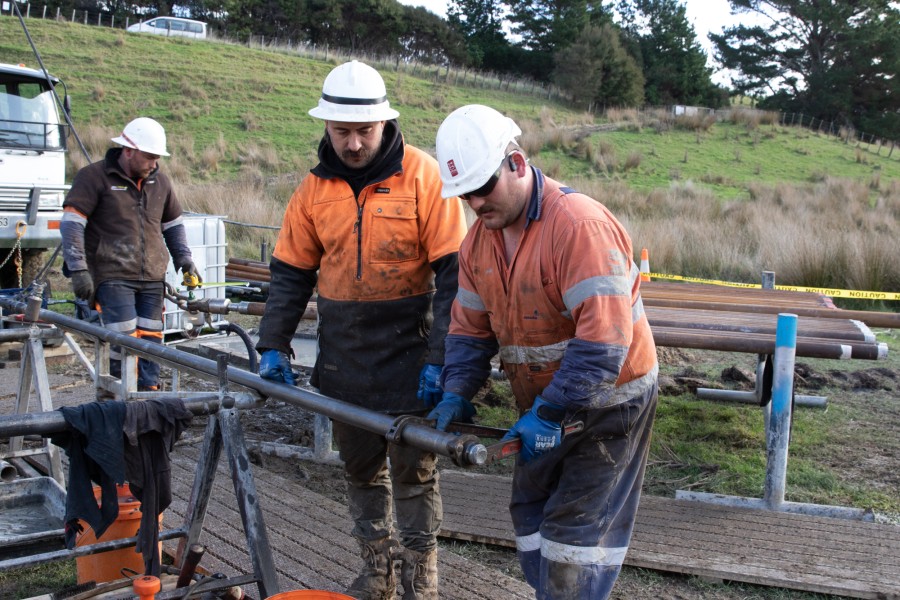
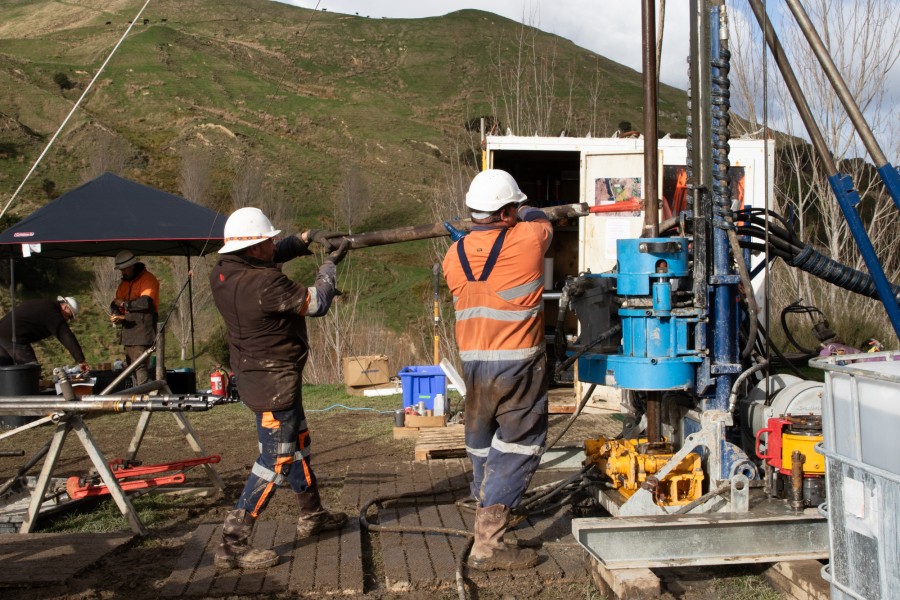
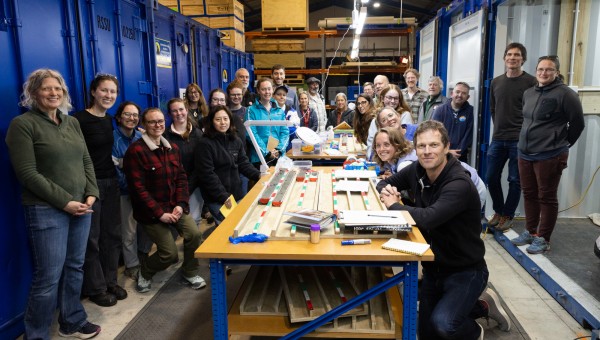
The modified drilling system was comprehensively tested on location in rural New Zealand. Photo: Ana Tovey
The foot slips have an excellent pedigree, having once been part of a rig used in ANDRILL, the scientific drilling project that is one of the predecessors of SWAIS2C.
SWAIS2C Drilling Engineer James MacPhail (Te Herenga Waka – Victoria University of Wellington Antarctic Research Centre) led the design and rebuild of the AIDD and says that the refurbished ANDRILL foot slips are a great addition to the system.
“They work really well, they’re very reliable and strong. Together the improvements reduce the chances of the drill string slipping.”
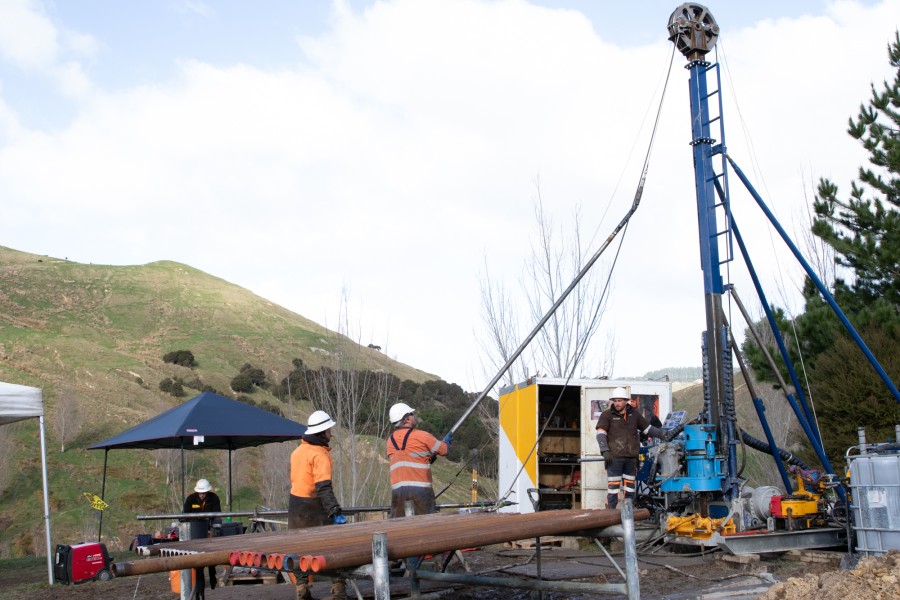
To ensure that the modifications function as intended, a week of testing took place at a farm in the Wairarapa region. This was also an opportunity for the drill team for the upcoming season to get hands on experience with the drilling system.
“It’s been great for camaraderie getting the team together. Seeing the drillers and engineers address any technical challenges as they arise, is really encouraging,” says Patterson.
More than 100 m of sediment core was recovered during the testing. The cores will be scanned for information about their physical and chemical properties, and then examined for microfossils. The team anticipate that the data will generate a record of environmental change in the Late Miocene, a period of time approximately 11.63 to 5.33 million years ago when carbon dioxide was higher and the ice sheets were smaller than today. This will complement the core we hope to retrieve from Crary Ice Rise next season.
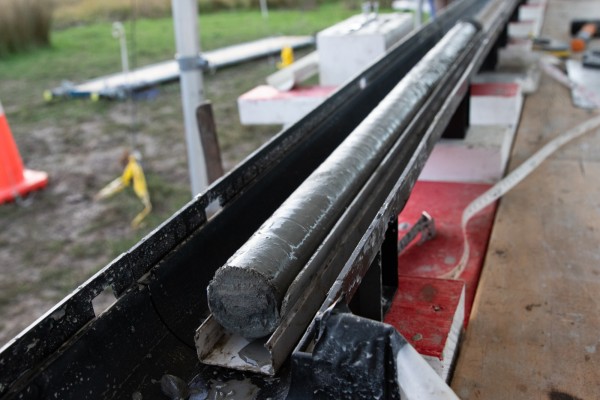
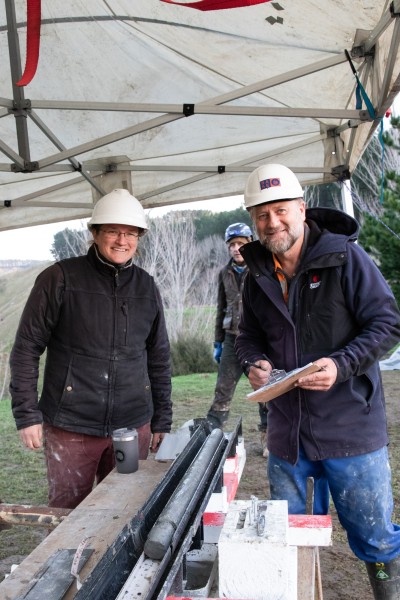
A freshly retrieved sediment core. Photo: Ana Tovey
Following the challenges of the previous field seasons, seeing the Big Rig in action, successfully retrieving core, was a high point.
“It’s been extremely exciting to see the core come up, and to know that we’ll be going into the deep field with a system that’s proven to work,” says Patterson.
With the drilling system having received a green light for the next field season, it will now be prepared for shipping back to Antarctica, and a traverse across the Ross Ice Shelf later this year.
More recent articles
View all articles
Project updates
Core workshop findings indicate past Ross Ice Shelf collapse and West Antarctic Ice Sheet retreat
09 July 2026
Analysis from our core description workshop supports the initial observations made in the field – our Antarctic sediment core holds a record of an open marine environment, far closer to…
Project updates
Core workshop gets underway
03 June 2026
We’ve just opened the best present ever – our first sediment core, retrieved from under the West Antarctic Ice Sheet last season.